
Where to Stay in Suriname
A regional guide to accommodation across the country
Paramaribo owns Suriname's only real hotels. The capital clusters every international-standard option within walking distance of the UNESCO wooden colonial core and the surging Suriname restaurants along Domineestraat and the Waterkant. Torarica Hotel & Casino has ruled the riverfront since the 1960s; Courtyard by Marriott delivers the polished modern tier. Converted colonial guesthouses handle the budget end. For a city this size, Paramaribo delivers honest value against quality. Step outside and the script flips. The interior, over 90 percent of Suriname, pure Amazon rainforest, runs on a tight circuit of lodges that rank among South America's most notable beds. Kabalebo Nature Resort demands a charter flight; Danpaati River Lodge drifts on the vast Brokopondo reservoir; Brownsberg Nature Park's hillside cabins stare across forest to the horizon. These places bundle meals, guides, and transport, so their per-person nightly rates read like expedition fees, not hotel tabs. Border towns keep it simple. Nickerie in the west and Albina in the east exist for crossings into Guyana and French Guiana, clean transit hotels, adequate, period. The Suriname beaches near Commewijne pull day-trippers from the capital, and a few plantation guesthouses give a rural breather between city bursts. Ask about Suriname hotels and you'll hear two tales: Paramaribo's tight urban market, and the wild but logistically heavy jungle lodge circuit.
Where to Stay in Suriname
Hand-picked hotels across price tiers for every visitor.
Our Top Picks
The highest-rated hotel in each price range, selected from across Suriname.
Top Pick: Paramaribo
Budget
Villa Famiri Boutique Hotel
Outdoor swimming pool
Massage room
Private parking
Airport pick-up
Top Pick: Paramaribo
Mid Range
Guesthouse Amice
Private parking
Luggage storage
Library
Bicycle rental
Top Pick: Paramaribo
Find Hotels Across Suriname
Compare prices from hotels across all regions
Search HotelsPrices via Trip.com. We may earn a commission from bookings.
Regions of Suriname
Each region offers a distinct character and accommodation scene. Find the one that matches your travel plans.
Mixed
Paramaribo isn't just Suriname's capital, it's the country's only real hotel market. The UNESCO-listed inner city shows off Dutch colonial wooden architecture on a scale you won't find anywhere else in the Americas, and the best hotels here mirror that distinctive character. The Torarica dominates the riverfront; mid-range and heritage properties crowd around Independence Square and Onafhankelijkheidsplein. Guesthouses line the shaded residential streets nearby. Suriname's best food scene, from Javanese warungs to Lebanese restaurants to the Central Market's Suriname food stalls, makes the city worth lingering in well beyond the colonial sightseeing.
Accommodation: You'll find everything from guesthouses under $30 to international chain hotels at $200. All sit within easy reach of historic inner city sights, and the top Suriname restaurants.
Gateway Cities
Where to stay in this region
Budget
Villa Famiri Boutique Hotel
Outdoor swimming pool
Massage room
Private parking
Airport pick-up
✓ Verified
Check prices on Trip.com →
Mid Range
Guesthouse Amice
Private parking
Luggage storage
Library
Bicycle rental
✓ Verified
Check prices on Trip.com →
Luxury
Yogh Hospitality
"Nice hotel"
Outdoor swimming pool
Casino
Gym
Parking
✓ Verified
Check prices on Trip.com →
Mid Range
Holland Lodge Paramaribo
"The room is not big,"
Outdoor swimming pool
Massage room
Public parking
Airport pick-up
✓ Verified
Check prices on Trip.com →
Mid Range
Royal Torarica
"The environment is elegant, the facilities are complete, and the breakfast varie…"
Outdoor swimming pool
Casino
Sauna
Massage room
✓ Verified
Check prices on Trip.com →
Budget to mid-range
Ten minutes by ferry from Paramaribo's waterfront, Commewijne slaps you with plantation history, former sugar and coffee estates now reborn as museums, cycling trails, and Atlantic coastline walks. The Suriname beaches here? Wild, brown-sanded stretches backed by mangroves instead of palms. They pull in visitors who crave the undeveloped character. Accommodation stays sparse throughout the district, most travelers treat Commewijne as a day trip from the capital. But a handful of plantation guesthouses deliver an atmospheric alternative for nights outside the city.
Accommodation: Forget five-star chains. Very limited, a handful of small plantation guesthouses and rural homestays. No international-standard hotels exist in the district.
Gateway Cities
Meerzorg
Nieuw Amsterdam
Marienburg
Where to stay in this region
Budget
Hotel Palacio
"Hotel is in very close in centrum, the staff is very friendly and is helpful. Ro…"
Public parking
Airport pick-up
Luggage storage
Airport drop-off
✓ Verified
Check prices on Trip.com →
Mid Range
Courtyard Paramaribo
"Great place to stay. Food is good. Breakfast is very nice with local products. O…"
Outdoor swimming pool
Casino
Gym
Private parking
✓ Verified
Check prices on Trip.com →
Mid Range
Greenheart Boutique Hotel
"一個充滿了人情味的特色酒店,酒店的各個角落都很美,前後在這裏住了近兩週,酒店的床品很舒服,遇到的每個人都很nice.同店長店員和其他客人都成為了朋友,得到了他們…"
Hiking
Parking
Car rentals
✓ Verified
Check prices on Trip.com →
Mid Range
Torarica Resort
"The Torarica Resort is a very good hotel. The property is very expansive close…"
Outdoor swimming pool
Beach volleyball
Sauna
Massage room
✓ Verified
Check prices on Trip.com →
Mid Range
Ramada by Wyndham Princess Paramaribo
"It's a bit troublesome not being able to use a credit card"
Outdoor swimming pool
Casino
Gym
Private parking
✓ Verified
Check prices on Trip.com →
Para & Brokopondo Districts
Budget to luxury
These two interior districts open Suriname's rainforest interior, no fanfare, just jungle. Brownsberg Nature Park perches on a forested plateau two hours south of Paramaribo and delivers the country's easiest birdwatching and jungle hiking. Push further south and Brokopondo reservoir spreads out, Afobaka dam's creation, where Danpaati River Lodge floats, an all-inclusive oddity reached only by motorboat. Bergendal Eco & Cultural River Resort straddles the Suriname River, mixing capital convenience with real nature, so travelers often crash here one night before plunging deeper.
Accommodation: Rustic park cabins at Brownsberg, cheap, bare-bones, exactly what you'd expect. Mid-range? Comfortable eco resorts line the Suriname River, hammocks included, no surprises. One all-inclusive luxury lodge sits on the Brokopondo reservoir. That's it.
Gateway Cities
Brownsweg
Brokopondo Town
Berg en Dal
Where to stay in this region
"沒去過,可惜了,因為飛機飛不過去啊"
Golf course
Private parking
Restaurant
Wi-Fi in public areas
✓ Verified
Check prices on Trip.com →
Mid Range
Royal Breeze Paramaribo
"The hotel is very well located in the city center, not far from the main market.…"
Gym
Parking
Airport pick-up
Luggage storage
✓ Verified
Check prices on Trip.com →
Mid Range
Eco Torarica
"Cost-effective, convenient transportation, very close to the presidential palace…"
Outdoor swimming pool
Private parking
Airport pick-up
Luggage storage
✓ Verified
Check prices on Trip.com →
Mid Range
Joah Inn Appartementen
Outdoor swimming pool
Private parking
Airport pick-up
Luggage storage
✓ Verified
Check prices on Trip.com →
Budget
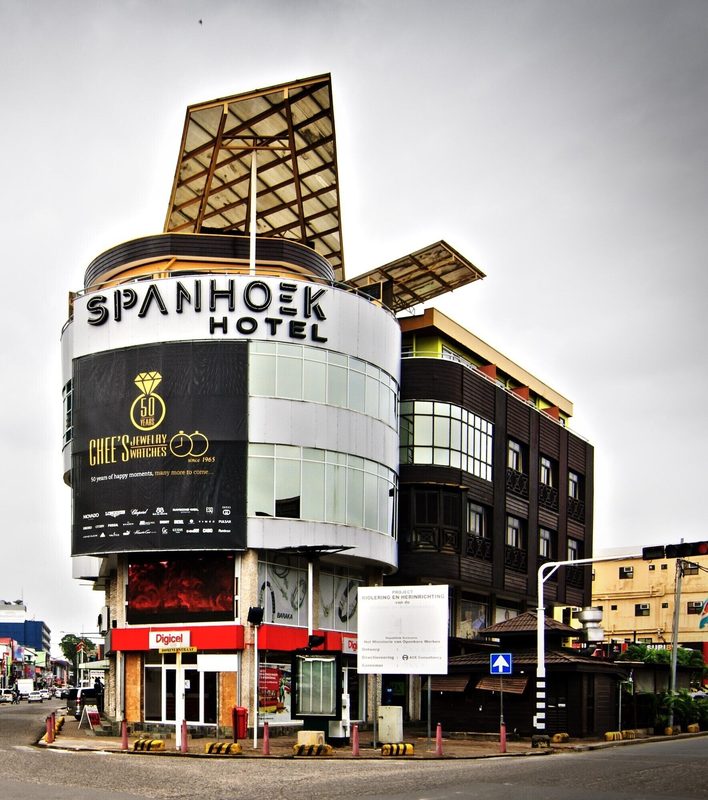
Spanhoek Boutique Hotel
"great hotel for seeing all of Suriname"
Gym
Luggage storage
Business center
Multi-function room
✓ Verified
Check prices on Trip.com →
Sipaliwini District
Mid-range to luxury (multi-night packages only)
Sipaliwini swallows most of southern Suriname, territory larger than the Netherlands, almost entirely Amazon rainforest, zero roads. Amerindian and Maroon villages dot the green. Reach them by small aircraft or multi-day river journey only. This is where Suriname's most extraordinary accommodation exists. Things to do in Suriname turn expedition here. Kabalebo Nature Resort, far west, charter flight from Paramaribo, runs one of South America's most remote jungle lodges. Stays are all-inclusive multi-night packages mixing sport fishing, wildlife watching, guided forest treks. Community-based lodges in villages like Palumeu trade comfort for connection. Less amenity. More culture.
Accommodation: Fly-in only. River-access only. No roads. You'll book months ahead, luxury wilderness lodges or a hammock in an Amerindian village, and every option arrives as a prepaid package.
Gateway Cities
Where to stay in this region
Budget
Gess Hotel
Casino
Private parking
Luggage storage
Restaurant
✓ Verified
Check prices on Trip.com →
Mid Range
Sheva Hotel
Indoor swimming pool
Gym
Private parking
Luggage storage
✓ Verified
Check prices on Trip.com →
Budget
Waterland Suites
Private parking
Luggage storage
Airport pick-up
Wi-Fi in public areas
✓ Verified
Check prices on Trip.com →
"環境幽靜舒適宜人,適合家庭去休閑度假"
Outdoor swimming pool
Spa
Massage room
Gym
✓ Verified
Check prices on Trip.com →
Budget
Radisson Hotel Paramaribo
Outdoor swimming pool
Gym
Luggage storage
Bar
✓ Verified
Check prices on Trip.com →
Nickerie District
Budget
Suriname's westernmost district runs right up to the Corantijn River border with Guyana. Nieuw Nickerie, the capital, sits quiet on the river, mainly a crossing point for travelers. Yet linger and you'll hit rice paddies rolling to the horizon, a Hindustaani-influenced culture that feels nothing like Paramaribo, plus Bigi Pan wetland reserve. This is one of the finest waterbird habitats in the Guiana Shield, scarlet ibis colonies flame against the sky, dozens of heron species patrol the shallows. Ask about things to do in nickerie Suriname and every answer swings back to Bigi Pan. Accommodation throughout the district stays basic but clean.
Accommodation: Basic transit guesthouses and one modest local hotel, functional, clean, aimed at border crossers, not leisure tourists.
Gateway Cities
Nieuw Nickerie
Wageningen
Where to stay in this region
Budget
Hotel Midnight
"Super"
Parking
Luggage storage
Airport pick-up
Wi-Fi in public areas
✓ Verified
Check prices on Trip.com →
Budget
Q-Inn Boutique Hotel
"Breakfast is good, the boss is very good, Suriname is pleasantly surprised, reco…"
Hiking
Public parking
Airport pick-up
Luggage storage
✓ Verified
Check prices on Trip.com →
Budget
Hotel North Resort
Parking
Gym
Luggage storage
Wi-Fi in public areas
✓ Verified
Check prices on Trip.com →
Budget
Dolfijn Studios
✓ Verified
Check prices on Trip.com →
Marowijne District
Budget to mid-range
Albina sits on the Marowijne River, the last stop before French Guiana. From its cracked-concrete pier, 20-foot dugouts buzz to Saint-Laurent-du-Maromi in fifteen minutes, no tickets, just 25 SRD in the captain's palm. Galibi Nature Reserve begins where the river meets the Atlantic. Between April and July, 800-pound leatherbacks and green turtles haul themselves onto the same coarse sand you walked that afternoon. Night tours run 150 SRD; red-torch rules are enforced, no flash, no excuses. Moengo, 40 minutes south, traded bauxite dust for spray paint. Old calcining towers now host residencies. Every wall shouts color. Stay in Albina, two guest-houses, 80, 120 SRD, or day-trip from Paramaribo. Marowijne won't pamper you. It will, however, show you turtles, art, and a border that still feels like the edge of the world.
Accommodation: Transit guesthouses in Albina, book one the night before your boat leaves. Moengo's lone cultural arts guesthouse hangs contemporary Maroon canvases in the hallways; you'll sleep under them for 20 USD. From March to August, STINASU opens its seasonal eco-lodge at Galibi. Rooms sell out fast while turtles drag themselves ashore to nest.
Gateway Cities
Albina
Moengo
Where to stay in this region
✓ Verified
Check prices on Trip.com →
Accommodation Landscape
What to expect from accommodation options across Suriname
International Chains
Paramaribo hoards all the chains, every single one. The Courtyard by Marriott stands alone as the only global brand in Suriname. Meanwhile the Torarica has locked down local luxury and no chain has managed to knock it off its throne. You won't find Hilton, Hyatt, or Accor anywhere in the country. Step outside the capital and accommodation is 100 % locally owned and operated, no exceptions.
Local Options
Paramaribo's budget scene belongs to family-run guesthouses, not chains. These places squat inside colonial wooden houses, six to fifteen rooms max. The good ones don't just hand you keys, they hand you insider intel. Where locals eat in Suriname restaurants. When to hit the market. Which alleles shave ten minutes off your walk. That beats any app, every time. Leave the capital? Small family guesthouses become your only roof. The hosts won't just check you in, they'll translate your Creole, walk you to dinner, pull up a chair.
Unique Stays
Kabalebo Nature Resort could fairly be called the fly-in jungle lodges of Sipaliwini that define Suriname's wildest sleep. This place operates in a class of its own for remote wilderness lodging in South America. Total isolation. The floating Danpaati River Lodge on the Brokopondo reservoir flips the script, different, equally extraordinary. You're on water now. No roads in. For cultural depth, Amerindian community lodges in villages like Palumeu drop you inside living indigenous communities. Zero tourist infrastructure. No buffer. Just you and the village.
Ready to book?
Compare hotel prices across Suriname
Search Hotels in SurinameBooking Tips for Suriname
Country-specific advice for finding the best accommodation
Contact jungle lodges directly, six to eight weeks ahead
Kabalebo's fly-in packages hinge on aircraft seats, not beds. Interior lodges, Kabalebo, Danpaati, Brownsberg, run lean. Capacity is tight, logistics twisty. Online booking platforms miss half the story. They can't track seat counts or river landings. Email the lodge. Call them. Lock the aircraft schedule first, then build your trip around it. No shortcuts.
Search hotels →Paramaribo rarely requires advance planning
Skip July and August. Skip Surinamese holidays. That is when Paramaribo empties out. Walk in without a booking, fine. Mid-range hotels cut walk-in rates below their online price. Sunday through Thursday, when business travel thins, they'll bargain.
Search hotels →Carry USD cash for interior stays
Paramaribo hotels quote and charge in USD or EUR, no mental math required. Jungle lodges demand final balances in USD, always. Outside the capital, guesthouses want Surinamese dollars in cash. Carry enough local bills for guesthouses, tips, and market stalls, ATMs simply don't exist past the main towns.
Search hotels →Factor in transfers when comparing lodge prices
$250 per person per night at an all-inclusive jungle lodge beats a $120 mid-range hotel, once you add guides, boat transfers, meals, and equipment. Do the math. The lodge folds everything into one price. The hotel doesn't. Run the full trip cost comparison before you write off those rates. Kabalebo and Danpaati run their logistics like clockwork.
Search hotels →When to Book
Timing matters for both price and availability across Suriname
High Season
Book Sipaliwini jungle lodge packages by May or June for August through November stays. The long dry season hits then, prime time for wildlife, fishing, and trekking. Paramaribo hotels for July and August need three to four weeks advance booking if you're targeting popular properties.
Shoulder Season
April through May and December through January, Paramaribo stays at standard rates, thinner crowds. The short dry season, February through March, works for interior travel. Lodge rates drop slightly, lower than the August to November peak.
Low Season
Two rainy seasons, May through early July and November through January, mean higher rivers. Boats glide farther. But jungle trails turn to mud. Paramaribo hotels keep rates and quality steady all year. Interior lodges stay open. Guides simply reroute around flooded ground. Brownsberg remains reachable, and looks good in light rain.
Two weeks ahead works for Paramaribo, comfortably. Brownsberg and river lodges? One month minimum. Kabalebo fly-in packages demand two to three months. Confirm aircraft first, that is the choke point, not beds.
Good to Know
Local customs and practical information for Suriname
Check-in / Check-out
Check-in is 14:00 to 15:00. Check-out? 11:00 to 12:00. Simple. Guesthouses bend the rules, stash bags early, shift check-in if you phone first. Jungle lodges don't care about hotel norms. Boat and aircraft timetables run the show.
Tipping
Tipping is appreciated but not culturally obligatory in Suriname. Leave the equivalent of $1 to $2 per night for housekeeping at guesthouses, generous by local standards. At jungle lodges, tip naturalist guides $10 to $20 per day. The expertise and physical demands justify it, guides at remote interior lodges earn a significant portion of their income this way.
Payment
Paramaribo hotels take your card, no problem. Mid-range properties swipe plastic too. Cash still rules everywhere else. Guesthouses want bills. Smaller hotels demand them. Jungle lodges? Dollars only. Bring USD cash reserves for jungle lodge balances; ATMs work fine in Paramaribo but vanish once you leave the city. The interior has zero machines.
Safety
Paramaribo is as safe as any South American capital, just don't flash your phone. Keep valuables secured, use hotel safes, and take registered taxis after dark instead of flagging unmarked cars. The interior throws logistical hurdles rather than security threats. Lodge operators handle these professionally and maintain evacuation protocols. Travel insurance covering medical evacuation is strongly recommended for any stay beyond Paramaribo given the distance from hospital facilities.
Found your region?
Compare hotel prices now.
Search Hotels